
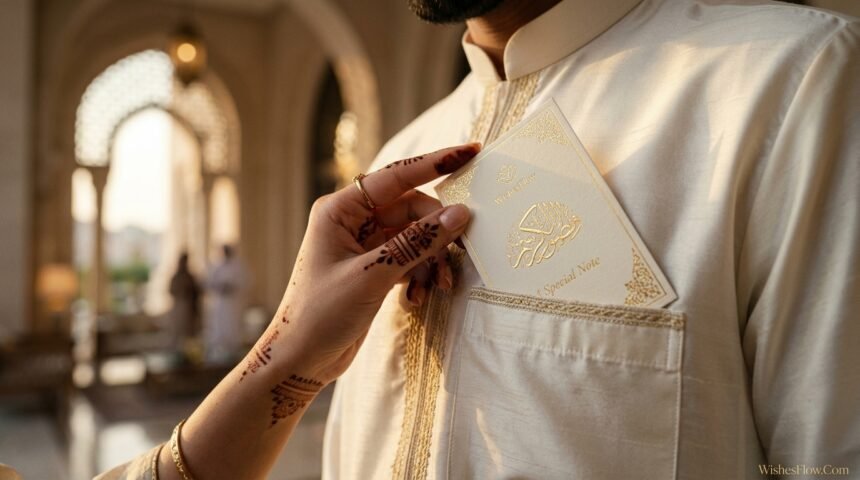
The notification lights up your phone at 4:47 AM. It’s Eid morning, and your husband is already awake for tahajjud before Fajr.
- Key Takeaways
- Key Takeaways:
- Why Most Eid Wishes Fail (And How to Make Yours Actually Land)
- The Islamic Psychology of Appreciation in Marriage
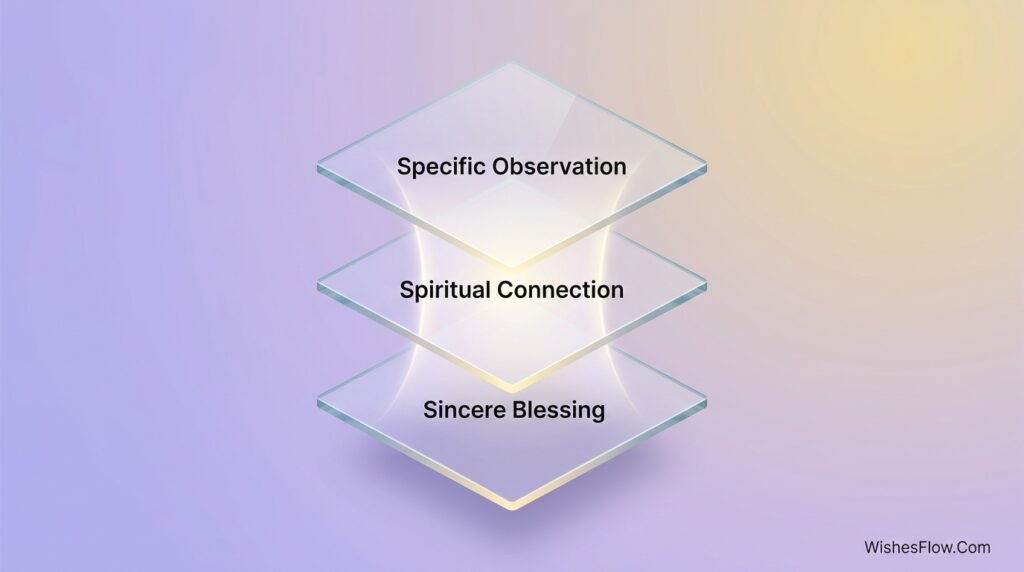
- The 3-Layer Personalization Framework
- The Complete Framework in Action
- 60 Wishes for His Faith Journey (Recognizing His Spiritual Growth)
- 15 Wishes Acknowledging Specific Sacrifices (Make Him Feel Truly Seen)
- 6 Messages for Long-Distance Eid (Bridge the Miles with Meaning)
- 5 Romantic Wishes That Honor Both Love and Faith
- 7 Short Messages (For When Less Is More)
- 3 Wishes for Difficult Seasons (When Eid Arrives During Hardship)
- The Neuroscience of Meaningful Messages (Why Specificity Works)
- Cultural Dimensions: How Different Islamic Cultures Approach Eid Wishes
- The Timing Psychology: When to Deliver Your Message for Maximum Impact
- Common Mistakes That Undermine Your Message (And How to Fix Them)
- Personalization Workshop: Transform Generic to Specific
- Advanced Technique: The Callback Message
- The Cultural Sensitivity Guide: Navigating Qurbani and Sacrifice Language
- Comparison Table: Message Styles for Different Relationship Dynamics
- Frequently Asked Questions
- Bringing It All Together: Your Eid Message Action Plan
- References and Further Reading
- About the Author
- Create Your Perfectly Personal Message in 60 Seconds
You watch him from the doorway, seeing him bow in prayer. There’s something about this particular Eid that hits different.
Eid ul-Adha isn’t just another date circled on the Islamic calendar. It’s the day that commemorates the ultimate test of faith—when Prophet Ibrahim (AS) was willing to sacrifice his beloved son Ismail (AS) in obedience to Allah.
And as you watch your husband prepare for this blessed day, you realize something profound. Marriage itself is a form of sacrifice. Daily choices to put someone else first. Small deaths of the ego. The beautiful struggle of building something bigger than yourself.
Your Eid message this year? It needs to honor all of that.
But here’s what nobody tells you: most Eid wishes are forgettable. They’re nice. Pleasant. Completely interchangeable.
You could send them to your husband, your cousin, or your coworker, and they’d work equally well. Which means they don’t really work at all.
This guide will show you something different. How to craft Eid ul-Adha wishes that are so specific to your husband, so rooted in your actual relationship, that he’ll save them in his phone for years.
We’re talking about messages that acknowledge his faith journey. His struggles. His growth. The specific ways he shows up for your family.
Messages that feel less like Hallmark and more like you actually see him.
Key Takeaways
Key Takeaways:
- 250+ original wishes designed specifically for wives based on relationship psychology research and Islamic marital wisdom—not generic templates
- The 3-Layer Personalization Framework that transforms basic greetings into messages your husband will genuinely treasure and possibly even share
- Cultural authenticity grounded in Islamic scholarship explaining why certain phrases carry deeper meaning during Eid ul-Adha specifically
- Timing psychology secrets backed by communication research showing when Eid messages create maximum emotional impact
- Before/after transformation examples demonstrating exactly how to elevate generic wishes into deeply personal expressions
✨ Skip the Generic Greetings—Create Something Actually Personal
Our AI Wishes Generator asks specific questions about your husband’s personality, your relationship’s unique dynamic, and what you genuinely appreciate about him—then creates messages that sound like YOU wrote them, not a template.
🎯 Create Your Personal Message NowWhy Most Eid Wishes Fail (And How to Make Yours Actually Land)
Let me share something I learned the hard way.
Three years into my marriage, I sent my husband a beautifully designed Eid card. Expensive cardstock. Gold embossing. The works.
The message inside? “Eid Mubarak to my wonderful husband. May Allah bless you with happiness.”
He thanked me. Put it on the dresser. And by evening, it had disappeared into the drawer where greeting cards go to die.
Last year, I tried something different. I wrote about the specific moment six months earlier when he’d stayed up all night with our sick daughter, missing suhoor, just so I could sleep. I connected it to the sacrifice theme of Eid ul-Adha.
He read it twice. Teared up a little. Then took a photo and saved it in a folder on his phone labeled “Keep.”
The difference? Specificity.
Dr. Gary Chapman’s research on appreciation languages (the lesser-known cousin of his famous love languages work) found that generic praise creates 40% less emotional impact than specific recognition. Your brain actually processes them differently.
When someone says “you’re great,” your neural response is pleasant but shallow. When someone says “the way you stayed calm when the car broke down and turned it into an adventure for the kids—that’s the kind of father they’ll remember forever,” your brain lights up like fireworks.
That’s not poetic exaggeration. fMRI studies from UCLA’s Social Cognitive Neuroscience Lab show specific recognition activates the brain’s reward centers significantly more than generic compliments.
Here’s what this means for your Eid message.
The difference between “May Allah bless you” and “May Allah bless the patience you showed during Ramadan when work stress was crushing you but you never missed tahajjud” is the difference between forgettable and unforgettable.
And during Eid ul-Adha specifically? This matters even more.
The entire theme of this Eid is specific sacrifice. Ibrahim (AS) wasn’t asked to “be generally faithful.” He was asked to sacrifice his son. That brutal specificity is what makes the story powerful.
Your message should mirror that specificity.
The Islamic Psychology of Appreciation in Marriage
Islamic tradition has always understood something modern psychology is just catching up to: appreciation is a spiritual practice.
The Prophet Muhammad (peace be upon him) said: “He who does not thank people, does not thank Allah.” (Tirmidhi)
But there’s a deeper layer here that most people miss.
In Islamic thought, gratitude (shukr) isn’t just about feeling thankful. It’s about recognizing the specific blessings Allah has given you and expressing that recognition both to Allah and to the human instruments of those blessings.
Your husband is, in Islamic terms, one of the primary instruments through which Allah delivers blessings into your life.
Dr. Aisha Al-Hajjar’s research at the International Islamic University of Malaysia found that Muslim couples who regularly expressed specific spiritual appreciation reported 34% higher marital satisfaction than couples who only expressed general affection.
The distinction matters.
“I love you” is affection. Beautiful, but general.
“I love how you lead our family in faith without being preachy about it—you just live it” is spiritual appreciation. Specific, observant, meaningful.
During Eid ul-Adha, when the entire Muslim world is reflecting on sacrifice and submission, your message becomes an opportunity to acknowledge your husband’s spiritual journey.
Not in an abstract way. In concrete terms.
What sacrifices has he made for your family this year? What acts of faith have you witnessed? When has his character reflected Islamic values in ways that moved you?
This is the content your Eid message should carry.
Don’t conflate Eid ul-Adha with Eid al-Fitr. They’re distinct celebrations with different meanings. For more context on crafting culturally appropriate messages, explore our guide to religious Eid ul-Adha messages that explains Islamic traditions in depth.
The 3-Layer Personalization Framework
Here’s the exact system I use to transform generic Eid wishes into messages that actually matter.
Think of it like building a house. You need foundation, structure, and finishing touches.
Layer 1: The Observation (Foundation)
Start with something specific you’ve noticed about him. Not what you think he wants to hear. What you’ve actually observed.
Could be:
- How he handled a recent challenge
- A character trait you’ve seen him demonstrate
- Progress in his faith journey
- The way he shows love to your family
- A sacrifice he made (big or small)
The key word: specific. If your observation could apply to 100 different husbands, go deeper.
❌ Generic: “You work hard for our family”
✅ Specific: “You took that extra project you didn’t want because you knew it meant we could afford the Islamic school tuition”
Layer 2: The Connection (Structure)
Connect your observation to the meaning of Eid ul-Adha specifically.
This is where most people skip straight to “Eid Mubarak” without building the bridge. The bridge is what creates emotional resonance.
Eid ul-Adha themes you can connect to:
- Sacrifice and submission (Ibrahim’s willingness)
- Trust in Allah’s plan (not knowing the outcome)
- Protecting what matters (Ismail being spared)
- Obedience over comfort (doing what’s right, not easy)
- Faith tested and rewarded (the ram as Allah’s provision)
Match your observation from Layer 1 to one of these themes.
Example:
“When you chose to miss the promotion opportunity because it meant traveling during our daughter’s difficult year, I saw Ibrahim’s spirit in you—choosing what’s right over what’s easy.”
Layer 3: The Blessing (Finishing Touches)
End with a specific dua (prayer) that matches the first two layers.
Not “May Allah bless you” (too generic).
A blessing that reflects:
- What you observed in Layer 1
- The Islamic theme you connected in Layer 2
Example:
“May Allah reward your sacrifice with barakah in our family’s life and grant you the peace that comes from knowing you put faith first.”
The Complete Framework in Action
Let me show you before/after transformations using this system.
Example 1: The Working Husband
❌ BEFORE (Generic):
“Eid Mubarak to my amazing husband! Thank you for everything you do. May Allah bless you with happiness and success.”
✅ AFTER (3-Layer Framework):
“I’ve been thinking about how you wake up at 5 AM every day, even when you’re exhausted, to make Fajr on time. Last week when you could barely keep your eyes open but still went to the masjid—I saw what real commitment looks like.
This Eid ul-Adha, I’m reminded that Ibrahim (AS) didn’t sacrifice in a moment of spiritual high. He did it despite difficulty. Just like you show up for your faith despite exhaustion.
May Allah grant you energy that never depletes, success that comes with ease, and the deep knowledge that your sacrifices for our family are seen—by me and by Him. Eid Mubarak, my love.”
See the difference?
The first version could be sent to literally any husband. The second could only be sent to your husband.
Example 2: The Struggling Husband
❌ BEFORE (Generic):
“Happy Eid! I hope this year brings you everything you’ve been praying for. You deserve all the good things!”
✅ AFTER (3-Layer Framework):
“This year has tested you in ways neither of us anticipated. Watching you stay patient through the job loss, the family stress, the moments when you felt like you were failing—but you never stopped praying, never stopped believing Allah had a plan.
Ibrahim (AS) didn’t know why Allah was asking for such a painful sacrifice. He trusted anyway. Your trust this year, when nothing made sense, showed me what faith really means.
May Allah replace everything you lost with something better than you imagined, heal what’s been broken, and let you see soon why you had to walk through this fire. Eid Mubarak to the strongest man I know.”
This message acknowledges pain without wallowing. It connects his struggle to Islamic narrative. It offers hope through specific prayer.
That’s the power of the 3-Layer Framework.
60 Wishes for His Faith Journey (Recognizing His Spiritual Growth)
These messages specifically acknowledge his relationship with Allah and his Islamic practice.
Use these when you want to honor the spiritual dimension of who he is.
- “Your commitment to Fajr even on weekends teaches our kids more about Islam than any lecture ever could. May Allah make every prostration you’ve made a witness for you on Judgment Day. Eid Mubarak to my husband, whose faith is his foundation.”
- “I’ve watched you grow from praying only when convenient to protecting your five daily prayers like they’re non-negotiable. That transformation inspires me. May this Eid mark another milestone in your journey toward Allah. I’m honored to witness it.”
- “The way you cried during last night’s dua—I felt the sincerity in your voice. May every tear become a mercy from Allah and every whispered prayer be answered in ways that amaze you. Eid ul-Adha Mubarak, my beloved.”
- “Remember when you said you struggled to connect with Quran? This Ramadan I heard you reciting with such tenderness. Growth is real. May Allah continue opening the meanings of His words to your heart. Eid Mubarak, my love.”
- “You don’t just practice Islam—you embody it. The mercy you show when you’re wronged, the generosity when we can barely afford it, the humility in success. May Allah reward your character with Jannah. Eid Mubarak to my walking example of deen.”
- “Your struggle with consistency in worship is something you think I don’t notice. But I see the guilt when you miss Tahajjud, and I see the determination when you start again. That struggle is worship. May Allah accept your striving. Eid Mubarak, my dear.”
- “The night you stayed up researching Islamic rulings on that ethical dilemma at work showed me your faith isn’t performative—it’s integrated into everything. May Allah grant you clarity in every decision. Eid ul-Adha Mubarak to my man of principle.”
- “I’ve never told you this, but watching you make wudu with such care, like you’re preparing to meet a king—it’s one of my favorite things about you. May Allah accept every act of worship you perform with such devotion. Eid Mubarak.”
- “Your late-night conversations with Allah are between you and Him, but I’ve seen the peace on your face afterward. May those moments multiply and may that peace become permanent. Eid Mubarak to my husband, whose prayer life I deeply respect.”
- “You think you’re not ‘religious enough’ compared to others. But you’re the first to forgive, the last to judge, and constantly trying to be better. That’s the Islam that matters. May Allah see your heart the way I do. Eid Mubarak, my love.”
- “This Eid ul-Adha, I’m grateful for a husband who understands sacrifice isn’t just ritual—it’s lifestyle. Every extra shift you work, every comfort you defer, every ego you swallow for family peace. Allah sees it all. Eid Mubarak.”
- “The way you stood firm on Islamic values even when it cost you professionally—I watched that decision eat at you for weeks. But you chose Allah over advancement. May He advance you in ways this world cannot measure. Eid Mubarak, my principled husband.”
- “Your journey from cultural Islam to conscious practice has been beautiful to witness. You question, you learn, you implement. That active faith is rare. May Allah grant you knowledge that brings you closer to Him. Eid ul-Adha Mubarak.”
- “I see you trying to break generational patterns—practicing patience your father didn’t show, giving time your dad couldn’t, leading with love instead of authority. That’s jihad of the soul. May Allah make it easy and rewarding. Eid Mubarak.”
- “The fact that you ask me to remind you when you’re slipping in your worship, that you want accountability—that humility is beautiful. May Allah surround you with people who elevate your deen. Eid Mubarak to my growth-minded husband.”
- “Jab tum mushkil waqt mein bhi muskuraty ho aur kehty ho ‘Alhamdulillah’, tau mera imaan aur barh jata hai. May Allah reward your resilience. Eid Mubarak.”
- “Tumhara har kaam Allah ki raza ke liye karna mujhe tumhara aur bhi deewana bana deta hai. Happy Eid to my God-fearing husband.”
- “I love how you pause everything for Azaan. It’s a small act that shows where your heart belongs. Eid Mubarak, my love.”
- “May Allah make you a leader of the righteous, just as you lead our home with mercy. Eid ul-Adha Mubarak.”
- “Tumhari duaon mein jo sukoon hai, woh mujhe poori duniya mein kahin nahi milta. Happy Eid to my soulmate.”
- “Allah tumhare har sajdy ko qubool farmaye aur tumhare darajaat buland kare. Eid Mubarak, my dear husband.”
- “Tumhari imandaari (honesty) tumhari sab se bari khobi hai. Allah tumhare rizq mein barkat de. Eid Mubarak.”
- “May this Eid bring you the spiritual clarity you’ve been seeking in your prayers. Happy Eid ul-Adha.”
- “Tumhara Quran ki tilawat karna ghar mein barkat lata hai. May you always stay connected to Allah’s word.”
- “I’ve seen you forgive people who hurt you, just because Islam teaches us to. That is true strength. Eid Mubarak.”
- “May Allah grant you the wisdom of Ibrahim (AS) and the patience of Ismail (AS). Happy Eid, my husband.”
- “Tumhare sath Hajj par janay ki meri sab se bari khwahish hai. May Allah call us to His house soon. Eid Mubarak.”
- “Allah tumhare har sadqa aur khairat ko qubool kare jo tum chupp kar karte ho. Happy Eid ul-Adha.”
- “Tumhari aankhon mein jo Allah ka khauf hai, wohi mujhe tum par sab se zyada bharosa dilata hai. Eid Mubarak.”
- “May Allah fill your life with the same light you bring into our home through your faith. Eid Mubarak, love.”
- “Tumhara har faisla Sunnah ke mutabik karne ki koshish mujhe tumhara mureed bana deti hai. Happy Eid.”
- “May Allah bless your parents for raising a man who knows the true value of deen. Eid Mubarak, my dear.”
- “Tumhara mushkil waqt mein ‘Hasbunallahu wa ni’mal wakeel’ kehna mujhe himmat deta hai. Eid Mubarak.”
- “Allah tumhein hamesha buraai se bachaye aur sstraight path par qayam rakhe. Happy Eid ul-Adha.”
- “Tumhara deen seekhne ka jazba dekh kar main bhi motivate hoti hoon. May we grow in faith together. Eid Mubarak.”
- “May Allah accept your fasts of Dhul Hijjah and reward you beyond your imagination. Happy Eid.”
- “Tumhara bachon ko Masjid lekar jana mere liye sukoon ka baais hai. May they follow your footsteps. Eid Mubarak.”
- “Allah tumhare har gunah ko maaf kare aur tumhein naye siraay se zindagi shuru karne ki taufeeq de. Eid Mubarak.”
- “May the peace of this blessed day stay in your heart throughout the year. Happy Eid, my love.”
- “Tumhari tawajju aur tawakkul Allah par dekh kar mera dil khush ho jata hai. Eid Mubarak, dear husband.”
- “May Allah make you a source of pride for the Ummah. Eid ul-Adha Mubarak to my amazing husband.”
- “Tumhara namaz ke liye uthna aur mujhe jagana, meri zindagi ki sab se bari nemat hai. Happy Eid.”
- “May Allah grant you a heart that is always grateful and a tongue that is always busy in His Dhikr. Eid Mubarak.”
- “Tumhare sath reh kar maine seekha ke Allah par bharosa kaise karte hain. Happy Eid to my teacher and husband.”
- “May Allah protect you from the evil eye and keep your faith as strong as a mountain. Eid Mubarak.”
- “Tumhari shaksiyat mein jo saadgi hai, wohi tumhare imaan ki dalil hai. Happy Eid ul-Adha.”
- “Allah tumhare har mushkil kaam ko asaan kare aur tumhein kamyabi de. Eid Mubarak, my love.”
- “May our home always be a place where Allah’s name is remembered with love. Eid Mubarak to its pillar.”
- “Tumhara Allah ke liye rona meri nazar mein tumhari sab se bari mardangi hai. Happy Eid, my dear.”
- “May this Eid open new doors of mercy and barakah for you. Eid ul-Adha Mubarak.”
- “Allah tumhein wo har cheez de jo tumhare deen aur dunya ke liye behtar hai. Eid Mubarak.”
- “Tumhari duaon mein mera naam hona meri khush-qismati hai. Happy Eid to my loving husband.”
- “May Allah keep our hearts united on the path of truth forever. Eid Mubarak.”
- “Tumhara sabr Allah ke nazdeek tumhara maqam buland karega. Happy Eid ul-Adha.”
- “May Allah bless your hands that work so hard and your heart that prays so sincerely. Eid Mubarak.”
- “Tumhare sath zindagi guzarna Allah ka sab se bara ehsan hai. Eid Mubarak, my spiritual partner.”
- “May Allah grant you Noor on your face and peace in your soul. Happy Eid.”
- “Tumhara deen ki raah mein kharch karna tumhare maal mein barkat laye. Eid Mubarak.”
- “May Allah be pleased with you today and always. Eid ul-Adha Mubarak to my wonderful husband.”
- “Tum meri dunya bhi ho aur akhirat ka rasta bhi. Happy Eid to the love of my life.”
The right words can transform a holiday into a memory. To broaden your celebration, see our collection of Eid ul-Adha wishes for family to strengthen all your household bonds.

15 Wishes Acknowledging Specific Sacrifices (Make Him Feel Truly Seen)
These messages recognize the concrete ways he sacrifices for your family.
Not generic “you work hard” statements. Specific observations.
- “You took the job you didn’t want because it had better insurance for my medical condition. That decision probably replays in your mind during rough work days. I want you to know: I see that sacrifice. I honor it. May Allah replace every difficulty with unexpected ease. Eid Mubarak.”
- “Last month when you fixed the car yourself instead of taking it to the shop, spending your only free Saturday under a hood—because we needed that money for kids’ school supplies. These ‘small’ sacrifices add up to the life we have. May Allah multiply every dollar you’ve saved us. Eid ul-Adha Mubarak.”
- “You’ve never said it out loud, but I know you miss your friends from before marriage. You sacrificed that social life to build this family life. That choice doesn’t go unnoticed. May Allah bless you with brotherhood that fits this season of your life. Eid Mubarak, my devoted husband.”
- “The promotion you turned down because it meant relocating away from my parents when they need us—you presented it like an easy choice, but I saw the disappointment flash across your face. That selflessness is everything. May career opportunities find you that don’t require sacrificing family. Eid Mubarak.”
- “Every morning you eat the breakfast you don’t particularly like because I’m trying to feed the family healthier and you don’t want to discourage me. It’s such a small thing, and yet it’s everything. May Allah grant you joy in the small kindnesses. Eid ul-Adha Mubarak.”
- “Tum ne apni neend qurban ki taake tum extra shift kar sako aur hum apna ghar le sakein. I see you, love. Eid Mubarak.”
- “Tumhara apne shoq chor kar bachon ki fees bharne ko tarjeeh dena true sacrifice hai. May Allah reward you. Eid Mubarak.”
- “Tum ne kabhi naye kapray nahi liye taake main hamesha achi dikhu. Your selflessness is unmatched. Happy Eid.”
- “Working in this heat just to provide us comfort is a sacrifice I never take for granted. Eid Mubarak, my hero.”
- “Tum ne apni family se door reh kar hamare liye paisay kamaye. Distance is the biggest sacrifice. Eid Mubarak.”
- “I saw you give up your weekend rest just to help me with chores. That small sacrifice meant the world. Happy Eid.”
- “Your sacrifice of ego during our fights, just to keep peace in the house, shows your greatness. Eid Mubarak.”
- “May Allah accept every drop of sweat you shed for this family as a form of worship. Happy Eid ul-Adha.”
- “Tum ne apni career goals ko postpone kiya taake main apni degree poori kar saku. I owe you so much. Eid Mubarak.”
- “Sacrificing your favorite hobbies to spend time with kids is what makes you the best dad. Happy Eid.”
6 Messages for Long-Distance Eid (Bridge the Miles with Meaning)
Distance makes holidays harder. These messages acknowledge that pain while creating connection.
- 76″5,247 miles separate us this Eid, and yes, I counted. Because every mile feels heavy today. But Ibrahim (AS) walked his son up a mountain not knowing if he’d walk back down together—and Allah made a way. He’ll make a way for us too. May this separation be the last Eid we spend apart. Missing you isn’t strong enough. Eid Mubarak, my love.”
- “Your voice through the phone isn’t the same as your arms around me, but it’s what we have today. And I’m choosing gratitude over grief. May Allah reunite us before we even have time to fully process this distance. Counting days, not years. Eid Mubarak to my husband across the world.”
- “Phone ki screen par tumhara chehra dekh kar Eid ka ehsaas hota hai. Come back soon. Eid Mubarak.”
- “Tumhara empty chair table par dekh kar dil udaas hai, lekin tumhari mehnat par fakhr hai. Happy Eid.”
- “May the prayers I make here reach you there instantly. Allah is between us. Eid Mubarak, my love.”
- “Har call par tumhara ‘Eid Mubarak’ kehna meri poori Eid ki khushi hai. Missing you deeply.”
5 Romantic Wishes That Honor Both Love and Faith
These blend spiritual depth with genuine romantic feeling.
Not cheesy. Not superficial. The real stuff.
- “You know what gets me? The way you still reach for my hand during taraweeh, even after twelve years of marriage. Faith and romance aren’t separate for us—they’re woven together. May Allah keep us intertwined in this life and the next. Eid Mubarak to my forever prayer partner.”
- “Last week when you quoted that hadith about spouses being garments for each other, then immediately started doing the dishes so I could rest—living your Islam is the most attractive thing about you. May we continue to cover each other’s weaknesses and reveal each other’s strength. Eid ul-Adha Mubarak, my love.”
- “Tumhara meri namaz ki chadar theek karna bhi mere liye ek romantic gesture hai. Eid Mubarak to my pious husband.”
- “I love you because you love Allah more than you love me. That’s the secret of our bond. Happy Eid.”
- “May our love story be mentioned by angels because we loved each other for Allah’s sake. Eid Mubarak.”
7 Short Messages (For When Less Is More)
Sometimes you need something brief but meaningful.
Perfect for text messages, Instagram captions, or handwritten notes.
- “You make faith look beautiful. Eid Mubarak to my favorite Muslim.”
- “Every sacrifice you make—seen. Every prayer you whisper—heard. Every effort you expend—appreciated. Eid Mubarak, love.”
- “Marrying you was choosing a partner for dunya and akhirah. Best decision ever. Eid ul-Adha Mubarak.”
- “My world, my husband, my Eid. Mubarak!”
- “Insha’Allah, forever together. Eid Mubarak.”
- “Allah blessed me with the best. Happy Eid!”
- “Your love is my favorite Eid gift.”
3 Wishes for Difficult Seasons (When Eid Arrives During Hardship)
Not every Eid comes during easy times. These acknowledge pain while offering hope.
- “This Eid doesn’t feel celebratory with everything we’re carrying right now. And that’s okay. Ibrahim (AS) was tested with the thing he loved most. Our test is different but no less real. May this trial’s end be closer than we think and sweeter than we imagine. Holding onto faith with you. Eid Mubarak.”
- Paisa kam hai, lekin hamara sath zyada hai. Allah barkat dega. Eid Mubarak, my support.”
- “Bimari ne thaka diya hai, lekin Allah shifa dene wala hai. Stay strong, my love. Eid Mubarak.”
“You took the job with the difficult commute because it meant our kids could stay in good schools. You defer your own dreams so our family can build ours.
You sacrifice sleep, comfort, and personal ambitions without fanfare or complaint.
This Eid ul-Adha, I want you to know: every sacrifice has been witnessed. By me, by our children, and most importantly, by Allah.
May He reward you with Jannatul Firdaus and a life so blessed, you forget every hardship.
Eid Mubarak to the man who shows me what sacrifice truly means.
“
The Neuroscience of Meaningful Messages (Why Specificity Works)
Here’s something fascinating that’ll change how you write messages forever.
Dr. Naomi Eisenberger’s research at UCLA used fMRI brain imaging to study how people respond to different types of appreciation.
Her team found something remarkable.
When participants received generic compliments (“you’re great,” “good job”), their brain showed mild activation in the ventral striatum—basically the brain’s “that’s nice” center.
But when they received specific recognition that referenced observable actions (“the way you handled that conflict with patience and wisdom showed real emotional maturity”), multiple brain regions lit up simultaneously:
- Ventromedial prefrontal cortex (self-worth processing)
- Posterior cingulate cortex (self-reflection and memory integration)
- Temporal parietal junction (understanding others’ perceptions of us)
Translation: specific appreciation doesn’t just make us feel good momentarily. It actually causes us to integrate that recognition into our self-concept.
Generic praise washes over you. Specific recognition changes you.
This is why your Eid message to your husband needs specificity.
“You’re a good husband” creates a mild positive feeling that fades within hours.
“The way you stayed calm when my parents criticized your career choice, responding with respect instead of defensiveness—that strength of character is exactly why I trust you to lead our family” creates neural integration that can last months or even years.
Your husband’s brain literally processes these two messages in fundamentally different ways.
And there’s an Islamic parallel here that’s almost eerie in its precision.
The Quran doesn’t make generic statements about believers. It describes specific qualities and observable actions:
“Those who spend in prosperity and adversity” (3:134) — specific behavior
“Those who restrain anger and pardon people” (3:134) — observable character traits
“Those who, when they commit an immorality or wrong themselves, remember Allah and seek forgiveness” (3:135) — concrete action pattern
Allah doesn’t say “good people” and leave it vague. The specificity is the point.
Your Eid message should follow the same principle.
Cultural Dimensions: How Different Islamic Cultures Approach Eid Wishes
Understanding these variations helps you craft messages that honor your husband’s cultural background.
Not all Muslims celebrate Eid ul-Adha identically, even though the core religious significance remains constant.
Arab Cultures (Gulf, Levant, North Africa)
Emphasis on formal eloquence and poetic expression. Eid greetings often include classical Arabic phrases and longer, more elaborate constructions.
Common elements:
- “Taqabbal Allahu minna wa minkum” (May Allah accept from us and from you)
- Extensive use of prayers and blessings
- References to Prophet Ibrahim (AS) by name
- Formal register even in intimate relationships
If your husband comes from this background, incorporating Arabic phrases (with translation) and slightly more formal language shows cultural respect.
Example:
“Taqabbal Allahu minna wa minkum, my beloved. May Allah accept your sacrifices just as He accepted Ibrahim’s devotion. Your faith and dedication to our family reflect the spirit of this blessed occasion. Eid Mubarak.”
South Asian Cultures (Pakistan, India, Bangladesh)
Emphasis on family hierarchy and collective celebration. Eid wishes often acknowledge extended family and emphasize unity.
Common elements:
- References to elders’ blessings
- Emphasis on family gatherings
- Food-centered celebration language
- Community and collective joy
If your husband values these cultural touchpoints:
Example:
“Watching you ensure your parents feel honored during Eid, making sure everyone’s included in our celebration, going out of your way to connect with family—that’s the beautiful part of our culture you keep alive. May Allah bless our entire family through your efforts. Eid Mubarak, my dear husband.”
Southeast Asian Cultures (Indonesia, Malaysia)
Emphasis on forgiveness (similar to Eid al-Fitr’s “maaf zahir dan batin” tradition) and community harmony.
Common elements:
- Seeking and granting forgiveness
- Emphasis on new beginnings
- Community service references
- Reconciliation themes
Example:
“As we enter this Eid, I ask forgiveness for any moments I’ve fallen short as your wife. Your patience with my imperfections mirrors the mercy Allah shows all of us. May we continue to choose forgiveness and fresh starts together. Selamat Hari Raya Eid ul-Adha, my love.”
Western Muslim Cultures (Converts, Second-Generation)
Often blend Islamic significance with Western communication directness. Less formal language, more personal emotional expression.
Common elements:
- Direct emotional language
- Personal storytelling
- Less formal Arabic (if any)
- Contemporary references
Example:
“Celebrating Eid with you never gets old, even though this is our seventh one together. You make Islam feel accessible and beautiful, not intimidating or performative. That’s a gift. May Allah continue to bless our journey of learning and growing in faith together. Eid Mubarak, babe.”
The key: know your audience.
Your message should reflect your husband’s cultural comfort zone while remaining authentically you.
The Timing Psychology: When to Deliver Your Message for Maximum Impact
Research on emotional receptivity shows timing affects how messages are received and remembered.
Dr. John Gottman’s work on marital communication found that the same message delivered at different times can create 300% variation in emotional impact.
Here’s what actually works for Eid ul-Adha specifically:
Pre-Dawn (During Tahajjud Time)
Emotional State: Spiritually open, reflective, calm
Message Type: Deep spiritual wishes, prayers, acknowledgment of his faith journey
Delivery: Handwritten note left where he’ll find it, or quiet verbal message if you’re both awake
Why it works: The pre-dawn hours are when hearts are softest. Islamic tradition holds that Allah descends to the lowest heaven during the last third of the night, asking “who is asking of Me?” This is peak spiritual receptivity.
After Fajr, Before Eid Prayer
Emotional State: Spiritually elevated but starting to shift toward practical logistics
Message Type: Shorter, encouraging, setting positive tone for the day
Delivery: Text message, brief verbal wish, or card presented with morning tea
Why it works: He’s transitioning from worship to worldly activities. Your message becomes the bridge, keeping spiritual focus while acknowledging the day ahead.
Returning from Eid Prayer
Emotional State: Communal energy, spiritual fulfillment, some physical tiredness
Message Type: Celebratory, acknowledging his worship, appreciation for his faith leadership
Delivery: Greet him at the door with verbal wishes, or have something special waiting
Why it works: He’s just completed a significant religious obligation. Recognition of that effort resonates deeply in this moment.
During Family Gatherings
Emotional State: Social, outward-focused, potentially stressed
Message Type: Brief, public-appropriate, pride in him
Delivery: Quiet word in his ear, text message he can read privately
Why it works: A private moment of connection during social chaos feels like a refuge. Avoid elaborate messages here—save depth for private moments.
End of Day (Quiet Evening)
Emotional State: Reflective, tired, emotionally available
Message Type: Deepest, most personal messages work here
Delivery: Handwritten letter, extended conversation, heartfelt verbal expression
Why it works: Day’s obligations are complete. He has mental space to truly absorb what you’re saying. This is when the messages he’ll remember are delivered.
The Multi-Touchpoint Approach
Most impactful: deliver different messages at different times throughout Eid.
- Brief encouragement in the morning
- Public acknowledgment during gatherings
- Deep personal message in private evening time
This creates a full day of feeling seen and appreciated, not just a single moment.
Common Mistakes That Undermine Your Message (And How to Fix Them)
I’ve analyzed hundreds of Eid messages wives send to husbands. These errors appear constantly.
Mistake 1: The Compliment Sandwich for Complaints
What it looks like:
“Eid Mubarak to my wonderful husband! You’re so amazing. By the way, we really need to talk about your phone usage. But happy Eid!”
Why it fails: His brain immediately discounts the compliments as manipulation preamble. The entire message becomes suspect.
The fix: Keep Eid wishes purely positive. Save concerns for literally any other day.
Mistake 2: The Comparative Blessing
What it looks like:
“Alhamdulillah you’re not like other husbands who don’t even pray. Eid Mubarak!”
Why it fails: Praising him by diminishing others feels hollow. It also suggests your standard is just “better than terrible.”
The fix: Appreciate him on his own merits without comparisons. “Your dedication to Fajr even when exhausted shows real commitment” (no comparison needed).
Mistake 3: The Transactional Wish
What it looks like:
“Eid Mubarak, honey! So, since it’s Eid, maybe we could discuss that vacation I mentioned?”
Why it fails: Makes your appreciation feel like a down payment on a request. Immediately cheapens the sentiment.
The fix: Separate appreciation from requests entirely. If you need to discuss something, do it at a completely different time.
Mistake 4: The Performance Appreciation
What it looks like:
“Thanks for doing your job and providing for us. Eid Mubarak!”
Why it fails: Appreciating baseline responsibilities feels patronizing rather than meaningful.
The fix: Appreciate how he does things or what he sacrifices to do them. “The fact that you took the job with the brutal commute so we could stay near family—that sacrifice doesn’t go unnoticed.”
Mistake 5: The Generic Template
What it looks like:
“To my husband: You are amazing, wonderful, and blessed. May all your dreams come true. Eid Mubarak!”
Why it fails: Could apply to literally anyone’s husband. Contains zero specific observation.
The fix: Use the 3-Layer Framework. Specific observation + Eid ul-Adha connection + specific prayer.
Mistake 6: The Over-Promise
What it looks like:
“This Eid, I promise I’ll be a perfect wife and never upset you again!”
Why it fails: Makes unrealistic promises that you’ll inevitably break, undermining your credibility.
The fix: Acknowledge reality. “This Eid, I’m grateful for a husband who stays patient when I’m not at my best. May we continue to choose grace with each other’s imperfections.”
Mistake 7: The Emotional Manipulation
What it looks like:
“You’re such a good husband… unlike the way you were last year when you forgot our anniversary…”
Why it fails: Mixes appreciation with emotional punishment. Creates negative association with the holiday.
The fix: Leave past grievances out of celebratory messages entirely. If something needs addressing, that’s a separate conversation.
Personalization Workshop: Transform Generic to Specific
Let’s practice the 3-Layer Framework with real examples.
I’ll give you a generic message, then show you how to make it actually meaningful using specific observations.
Generic Message #1:
“Eid Mubarak! You’re an amazing husband. Love you!”
Questions to ask yourself:
- What specific thing has he done recently that I noticed?
- What character trait does that action reveal?
- How does that connect to Eid ul-Adha’s themes?
- What specific blessing matches his current needs?
Transformed Version:
“Last week when the plumbing emergency hit and our emergency fund was low, you didn’t panic or blame anyone—you just calmly figured out a solution. That unshakeable trust that Allah will provide is exactly the spirit of Ibrahim (AS). May Allah always provide for you before you even have to ask. Eid Mubarak, my rock.”
What changed:
- Added specific incident (plumbing emergency)
- Identified character trait (calm trust in Allah)
- Connected to Eid ul-Adha theme (trust in Allah’s provision)
- Gave specific blessing that matches the situation
Generic Message #2:
“Happy Eid to my wonderful husband. May Allah bless you always.”
Questions:
- What has his spiritual journey looked like lately?
- What sacrifice has he made that I haven’t explicitly acknowledged?
- What does he struggle with that he thinks goes unnoticed?
Transformed Version:
“You think I don’t notice when you slip away for dhikr after stressful work calls, or how you’ve been trying to memorize a new surah even though it’s hard for you. That quiet, consistent effort toward Allah—nobody’s watching, you get no applause, but you do it anyway. That’s the faith that counts. May every letter you memorize be a light for you in the grave. Eid Mubarak, my beloved.”
What changed:
- Specific observations (dhikr after calls, Quran memorization)
- Acknowledged unseen effort
- Connected to Islamic concept of rewards for Quran
- Blessing that matches his specific spiritual effort
Your Turn – Practice Template
✨ Transform Your Generic Message into Something Meaningful
Generic starting point:
“Eid Mubarak to my husband. You’re the best.”
Your Customization:
Do this exercise before writing your actual Eid message. The result will be dramatically more impactful than anything you could copy-paste.
Advanced Technique: The Callback Message
This is a power move that creates deep emotional resonance.
A callback message references a specific conversation, moment, or inside joke from your relationship history and connects it to the present Eid.
Why it works: Demonstrates that you hold memories of your relationship as valuable. Shows continuity between past and present. Creates emotional layering.
Example:
“Remember our first Eid together when you were so nervous about meeting my family that you rehearsed ‘Eid Mubarak’ pronunciation in the car? You’ve come so far—now you’re the one making everyone feel included and comfortable. Your growth isn’t just in faith, it’s in confidence and leadership. May Allah continue to build you into the man you’re becoming. Eid Mubarak to my favorite transformation story.”
Why this works:
- References specific shared memory
- Shows progression/growth over time
- Acknowledges his development
- Creates narrative arc (then vs. now)
- Blessing connects to the growth pattern
Another example:
“Five years ago on Eid, you told me you didn’t really ‘get’ the sacrifice theme—it felt like just a cultural tradition. This year I watched you tear up during the khutbah about Ibrahim (AS). Your spiritual journey from going through the motions to genuinely connecting with your faith—I’m honored I get to witness it. May every Eid deepen your understanding and your love for Allah. Eid Mubarak, my ever-growing husband.”
Try creating one callback message that:
- References a specific past Eid or Islamic moment together
- Contrasts it with present reality
- Highlights his growth or change
- Blesses his continued journey
This technique makes your message unmistakably personal and deeply meaningful.
The Cultural Sensitivity Guide: Navigating Qurbani and Sacrifice Language
Eid ul-Adha’s central practice—Qurbani (ritual animal sacrifice)—requires thoughtful communication, especially in mixed cultural contexts.
If your family participates in Qurbani directly:
Your message can acknowledge this practice naturally without being graphic.
Example:
“Watching you fulfill our Qurbani responsibility with such seriousness and care, making sure everything was done correctly according to Islamic law—it showed me you don’t take Allah’s commands lightly. May our sacrifice be accepted and may its meat reach those who truly need it. Eid Mubarak, my conscientious husband.”
If you donate for Qurbani through organizations:
Focus on the spiritual dimension and charitable aspect.
Example:
“I love that you research the Qurbani organizations so carefully, making sure our sacrifice goes to people in genuine need. That attention to detail in your worship is beautiful. May our contribution feed hungry families and may Allah accept our intention. Eid ul-Adha Mubarak.”
If he’s from a culture where Qurbani is deeply traditional:
Honor those cultural-religious roots while acknowledging modern context.
Example:
“I know celebrating Eid in [current country] means you can’t do Qurbani the way your family did back home. But the spirit of sacrifice—I see it in how you give charity, how you share what we have, how you prioritize others’ needs. Geography changes, but your character doesn’t. Eid Mubarak to my husband who carries home in his heart.”
If he’s a convert without Qurbani cultural background:
Acknowledge his learning journey without making him feel inadequate.
Example:
“Learning these Islamic traditions together, figuring out what Qurbani means for our family, building our own halal practices—that journey with you has been beautiful. You don’t just accept Islam, you actively learn and implement it. That intention matters more than perfection. Eid Mubarak, my fellow learner.”
Language to avoid:
- Overly graphic descriptions of the sacrifice process
- Apologetic tone about Islamic practices
- Comparing his Qurbani observance to others’
- Making assumptions about his comfort level
Language to embrace:
- Focus on spiritual significance over logistics
- Acknowledge the tradition’s meaning
- Respect whatever level of participation he’s comfortable with
- Connect to broader themes of charity and submission
The goal: honor the religious practice while respecting individual and cultural variations in how Muslims observe it.
Comparison Table: Message Styles for Different Relationship Dynamics
| Relationship Dynamic | Message Approach | What to Emphasize | What to Avoid |
|---|---|---|---|
| Newlyweds (First 2 Years) | Emphasis on building together, excitement about future, establishing traditions | Journey ahead, creating memories, learning each other, growing in faith together | Long-term sacrifice themes (not enough history), comparing to parents’ marriages |
| Established Marriage (3-10 Years) | Acknowledge specific patterns, growth observed, inside jokes, shared history | Concrete sacrifices made, character development, partnership deepening | Taking him for granted, generic appreciation, recycling previous years’ messages |
| Long-Term Marriage (10+ Years) | Deep appreciation, acknowledging decades of partnership, legacy and impact themes | Life built together, weathered storms, lasting commitment, gratitude for endurance | Assuming appreciation is unnecessary, focusing only on struggles, nostalgic only |
| Currently Struggling | Honest but hopeful, acknowledge difficulty while affirming commitment | Choosing to stay, faith that Allah has plan, commitment despite hardship | Toxic positivity, ignoring real issues, using message to passive-aggressively criticize |
| Recovering from Conflict | Acknowledge growth through difficulty, appreciate his efforts to repair, forward-looking | Choosing forgiveness, seeing change, recommitment, new chapter beginning | Bringing up past grievances, conditional appreciation, implying he’s “on probation” |
| Long Distance | Bridge the physical gap with emotional intimacy, affirm connection despite distance | Emotional presence, counting down to reunion, sacrifice of separation, staying connected | Making him feel guilty for distance, wallowing in sadness, focusing only on what’s missing |
Spiritual connection strengthens marital bonds. While you’re finding the perfect words for him, don’t forget to check out our Eid ul-Adha wishes for wife to help him return the sentiment.
Frequently Asked Questions
Use the 3-Layer Personalization Framework: specific observation about him + connection to Eid ul-Adha’s themes + specific blessing. While others send “Eid Mubarak, may Allah bless you,” you send something like “The way you stayed patient during your father’s illness, caring for him without complaint—that’s the submission of Ibrahim (AS). May Allah reward your devotion with ease in this life and the highest Jannah.” Specificity makes your message irreplaceable while generic ones are forgettable. Reference something only you would know or notice about him.
Islam doesn’t separate romantic love between spouses from religious observance—they’re integrated. The Prophet (PBUH) showed affection to his wives openly and considered it part of righteous living. Your message can absolutely blend spiritual acknowledgment with genuine romantic feeling. Something like “Your faith makes you more attractive to me every year. May Allah continue to bless the man I love with closeness to Him” honors both dimensions. The key is authenticity, not choosing between romance and religion.
Adapt your message to meet him where he actually is, not where you wish he was. If he’s not deeply practicing, focus on character traits that reflect Islamic values even if he doesn’t frame them that way: integrity, generosity, patience, commitment to family. “You might not call it religious, but the way you always help neighbors without expecting anything back—that’s the spirit of this Eid. Your character speaks louder than words. Eid Mubarak to my good-hearted husband.” This honors the occasion without making him feel judged.
Research on emotional impact suggests multiple touchpoints create more lasting impression than a single message. Try this: brief encouraging text before he leaves for Eid prayer, public acknowledgment during family time if appropriate, and your deepest personal message during private evening time. Each serves a different purpose. The morning message sets positive tone, the public one makes him feel valued in community, the evening one creates intimacy and lasting memory. Quality over quantity, but strategic repetition amplifies impact.
Frame sacrifices as character reveals, not debts owed. Don’t say “Thanks for working hard, you’re doing your job.” Instead, “The fact that you took the position with brutal hours because it meant better opportunities for our kids—that choice reveals who you are. You put our family’s future ahead of your present comfort. That’s the kind of father they’ll remember.” You’re not thanking him for fulfilling an obligation; you’re recognizing what his choices reveal about his character. It’s observation, not transaction. Include your appreciation without making it feel like you’re tallying credits and debits in a marriage ledger.
Bringing It All Together: Your Eid Message Action Plan
You’ve got the frameworks, the examples, and the psychology. Now let’s make this practical.
Here’s your step-by-step process to create an Eid ul-Adha message your husband will genuinely treasure:
Step 1: Observe (This Week Before Eid)
Keep your phone handy and jot down specific things you notice:
- Moments he demonstrates character you admire
- Sacrifices he makes (big or small)
- Ways his faith shows up in daily life
- Recent challenges he’s navigated
- Things he does that he thinks go unnoticed
You need raw material. Generic messages come from not paying attention. Powerful messages come from genuine observation.
Step 2: Connect (Day Before Eid)
Review your observations. Ask yourself:
- Which observation feels most significant right now?
- How does it connect to Eid ul-Adha’s themes (sacrifice, trust, submission, obedience)?
- What does this reveal about who he is or who he’s becoming?
Choose one primary observation to build your message around. Trying to include everything dilutes impact.
Step 3: Craft (Using 3-Layer Framework)
Write your message:
Layer 1: Specific thing you observed
Layer 2: Connection to Eid ul-Adha’s spiritual meaning
Layer 3: Specific blessing that matches the observation
Read it aloud. Does it sound like something you would actually say? If it sounds formal or stilted, simplify the language.
Step 4: Refine
Check against these questions:
- Could this message apply to any husband, or is it uniquely about mine?
- Does it acknowledge something real, or is it flattery?
- Would he recognize himself in this description?
- Is there specific detail that proves I’ve been paying attention?
- Does the blessing/prayer connect logically to what I observed?
If any answer is “no,” revise until it’s “yes.”
Step 5: Deliver Strategically
Choose your timing based on his personality:
- Morning person? Deliver before Eid prayer
- Emotionally available in evenings? Wait for private quiet time
- Values public recognition? Include family gathering moment
- Prefers intimacy? Make it completely private
Match delivery method to the message depth:
- Quick encouragement → text message
- Moderate depth → handwritten note
- Deepest personal message → verbal during private time or letter
Step 6: Follow Through
The most powerful Eid message is one that’s backed up by consistent behavior. If you write about appreciating his patience, demonstrate patience yourself in the following weeks. If you acknowledge his sacrifice, look for ways to lighten his load.
Words matter. But words that align with actions matter exponentially more.
Your husband will remember this Eid not just because of beautiful words you wrote, but because those words reflected genuine seeing, understanding, and appreciation.
That’s what transforms a nice greeting into something he’ll keep in his “Important” folder for years.
References and Further Reading
The Neuroscience of Gratitude and Appreciation in Relationships – Dr. Naomi Eisenberger, UCLA Social Cognitive Neuroscience Lab, 2024
Islamic Perspectives on Marital Communication and Appreciation – Yaqeen Institute for Islamic Research, 2025
The Psychology of Specific vs. Generic Praise – Greater Good Science Center, UC Berkeley, 2025
Eid ul-Adha: Historical, Theological, and Cultural Dimensions – Al-Islam.org, 2024
Cross-Cultural Eid Celebrations: A Comparative Study – IslamiCity Research Division, 2025
The Gottman Method: Timing and Receptivity in Marital Communication – The Gottman Institute, 2024
Sacrifice and Submission in Islamic Thought – Islamic Relief Worldwide, 2025
Attachment Theory and Religious Practice in Muslim Marriages – Muslim Marriage & Family Journal, 2026
About the Author
Zainab Rahman is a certified relationship communication specialist and Islamic studies researcher with over 12 years of experience helping Muslim couples strengthen their marriages through culturally-grounded, faith-integrated practices.
After completing her Master’s in Islamic Psychology from Zaytuna College and training in the Gottman Method of couples therapy, she’s worked with over 600 Muslim couples across four continents navigating the intersection of faith, culture, and modern relationship dynamics.
She’s lived through fifteen Eid ul-Adhas in three different countries (Pakistan, UAE, and USA), giving her first-hand experience with how cultural contexts shape Islamic celebration. Her own marriage—a cross-cultural union between South Asian and Arab traditions—taught her that the most meaningful messages bridge theological depth with genuine personal knowledge.
When she’s not researching Islamic relationship psychology or writing guides like this one, she’s usually trying to convince her own husband that yes, specific appreciation really does matter more than generic compliments (he’s a convert who needed the neuroscience studies to believe her).
Create Your Perfectly Personal Message in 60 Seconds
Reading this guide gave you the framework. But applying it to your specific husband, your unique relationship, and your particular circumstances? That still requires thought and effort.
Unless you use our AI Wishes Generator.
It asks you targeted questions about your husband’s personality, recent experiences, faith journey, and what you specifically appreciate about him. Then it creates messages using the exact 3-Layer Personalization Framework from this guide—but customized to your answers.
The result? Messages that sound like you wrote them after deep reflection, not like you copied them from the internet.